The ‘Boring’ Plan That Made Warren Buffett Rich—And Why You’re Not Using It Enough
OMAHA, NE – Warren Buffett, the billionaire investor and CEO of Berkshire Hathaway, has long been revered for his shrewd stock-picking. Yet, the Oracle of Omaha has spent decades recommending a strategy for everyday Americans that is so simple and affordable, most people ignore it in favor of chasing the next hot stock: the low-cost S&P 500 index fund.
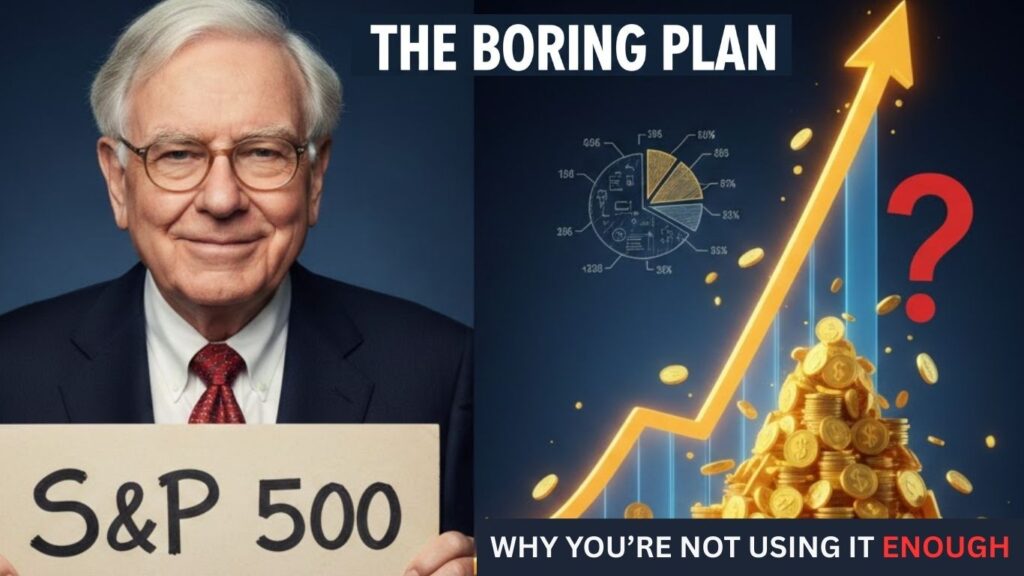
Buffett’s endorsement is not just theoretical; it’s the centerpiece of his own estate plan. He has famously advised that the money he leaves to his wife should be invested with a simple allocation: 90% in a low-cost S&P 500 index fund and 10% in short-term government bonds.
The Power of Passivity
Buffett’s argument is rooted in simple math and behavioral science:
- Low Fees Win: Actively managed funds employ teams of analysts and fund managers who charge fees that can reach 1% or more annually. Over decades, these fees silently destroy wealth. By contrast, passive index funds that simply mirror the market have rock-bottom expense ratios (some as low as 0.03%), ensuring more of the investor’s return stays with the investor. Buffett proved this point by winning a decade-long bet that a simple index fund would outperform a hand-picked basket of hedge funds.
- Broad Diversification: The S&P 500 tracks 500 of the largest, most economically significant U.S. companies, including tech giants like Nvidia, Apple, and Microsoft. When you buy an S&P 500 fund (such as the Vanguard S&P 500 ETF (VOO), which Buffett favors), you instantly own a slice of the entire American economy. This diversification eliminates the need to guess which single stock will win.
- The Time-Tested Engine: Historically, the S&P 500 has delivered an average annual return of around 10% before inflation. Buffett advises that the average investor should stop trying to “time the market” or “pick winners” and instead harness the predictable, long-term growth of the U.S. economy.
“The goal of the nonprofessional should not be to pick winners. Instead, they should own a cross-section of businesses that in aggregate are bound to do well. A low-cost S&P 500 index fund will achieve this goal.”
— Warren Buffett




Why Investors Still Get It Wrong
Despite this clear advice from one of history’s greatest investors, many retail investors fail to adopt the simple, “boring” index fund strategy because:
- Emotional Trading: Investors often buy high (out of optimism) and panic-sell low (out of fear), leading to poor returns. The passive index approach requires consistency—buying regularly, regardless of market conditions (dollar-cost averaging)—which removes emotion from the equation.
- The Lure of the ‘Hot Stock’: The daily barrage of financial news and social media trends encourages the chasing of high-flying, speculative stocks. This hyper-activity generates high transaction costs and often leads to missing out on the steady, long-term compounding of the broad market.
The bottom line, according to Buffett, is that in investing, simplicity and discipline are far more valuable than perceived complexity or brilliance. For most people, the path to wealth isn’t a complex map, but a single, straight line: buy the index and let compounding do the rest.