
The “Gurz Maar” Phenomenon: Why This 800-Year-Old Sufi Ritual Defies Medical Science?
You’ve likely seen the Gurz Maar viral clips: a man sits calmly in a crowded shrine while a sharp metal spike is driven into his scalp. There is no scream. There is no panic. And perhaps most shockingly, there is almost no blood.
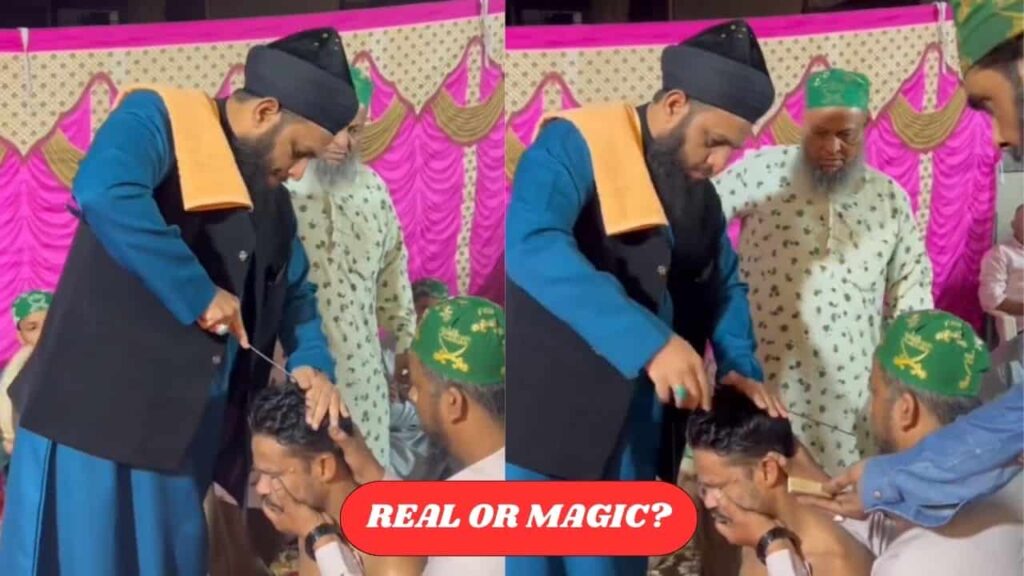
It looks like a magic trick or a dangerous stunt, but for millions of followers in South Asia, this is a deeply sacred act of devotion. This is the ritual of “Gurz Maar,” a centuries-old tradition that continues to baffle scientists and captivate believers.
What is Happening?
The video in question captures a Rifa’i Ratib ceremony, often performed during the Urs (death anniversary) of Sufi saints in India and Pakistan. The central figure, usually a spiritual guide or Khalifa, uses a sharp metal instrument known as a Gurz (a mace or heavy needle).
Amidst the hypnotic chanting of Zikr (remembrance of God), the Gurz is pierced into the skin, often the scalp, cheek, or neck, of a devotee. The devotee enters a state known as Wajd (spiritual ecstasy), where they reportedly transcend physical sensation.




The 800-Year-Old Lineage
This practice isn’t a modern invention. It traces its roots back to the 12th century and the Rifa’i Sufi Order (founded by Sheikh Ahmed ar-Rifa’i). The order is famous historically for these “miraculous” demonstrations.
For the participants, the act is not about self-harm. It is a testament of faith. The belief is simple: if your heart is pure and your connection to the Divine is strong, you are under the protection of the Saint, and the metal cannot harm you.
The Science: Miracle or Mind Over Matter?
How is it physically possible to be pierced without bleeding out? Skeptics and medical experts have proposed several theories:
- The Trance State: The intense rhythmic chanting and hyper-aroused atmosphere can trigger a massive release of endorphins (the body’s natural painkillers), effectively numbing the devotee to pain.
- Vasoconstriction: In states of high adrenaline or intense focus, blood vessels in the skin can constrict, significantly reducing bleeding.
- Precision Technique: Experienced leaders know exactly where to place the needle to avoid major arteries and nerves, piercing only the cutaneous layers where bleeding is minimal.
What is Happening in the Video?
- The Act: A religious leader (distinguished by his blue vest and black turban) is inserting a long, sharp metal skewer or needle (sometimes called a Gurz or Shish) into the scalp/skin of a devotee’s head.
- The Devotee: The man sitting is a participant who submits to this act. He appears calm and does not show signs of pain, which is a key part of the ritual’s significance.
- The Atmosphere: The background involves loud rhythmic chanting, known as Zikr (remembrance of God). The crowd is chanting religious verses, likely praising God (Allah) or Sufi saints, which helps induce a trance-like state in the participants.
Conclusion
Whether you view it as a divine miracle or a supreme example of mind-over-matter, the Gurz Maar ritual remains one of the most visually arresting displays of faith in the world. It serves as a powerful reminder of the diverse and mystical tapestries that make up South Asian culture (India and Pakistan).



One Comment